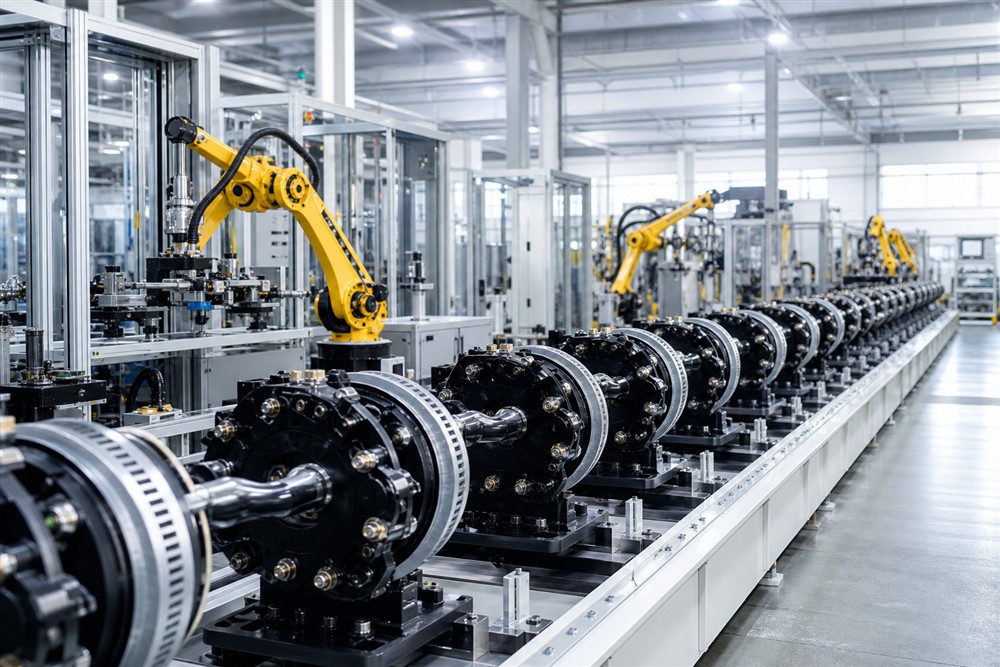
Drum trailer brakes remain widely used because they combine strong braking force, compact packaging and serviceable components. Buyers still need to match the assembly to the axle, load, wheel-end geometry and control system.
How the braking force is created
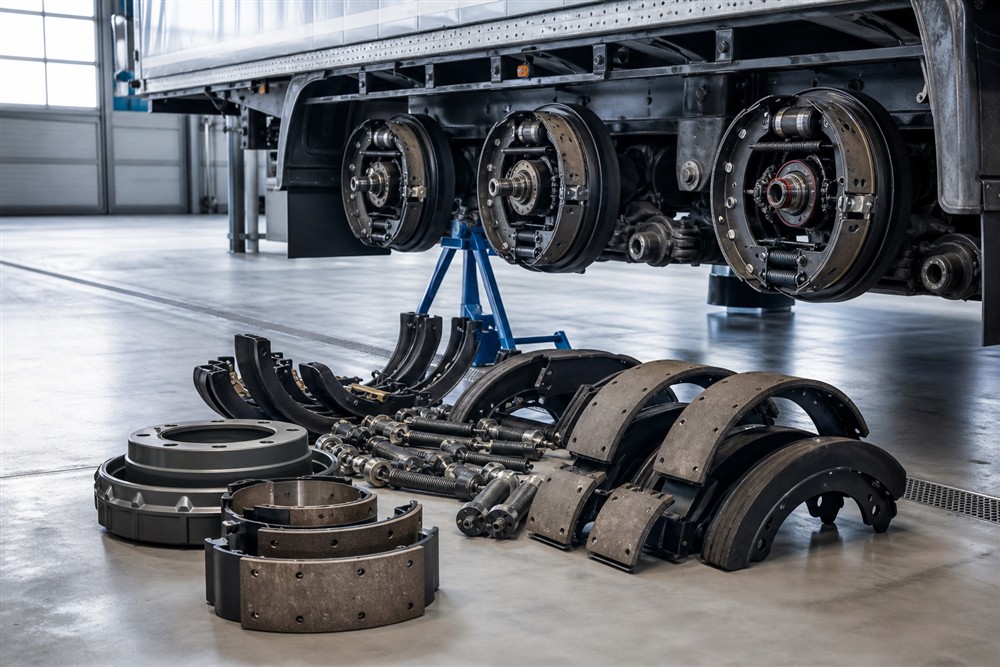
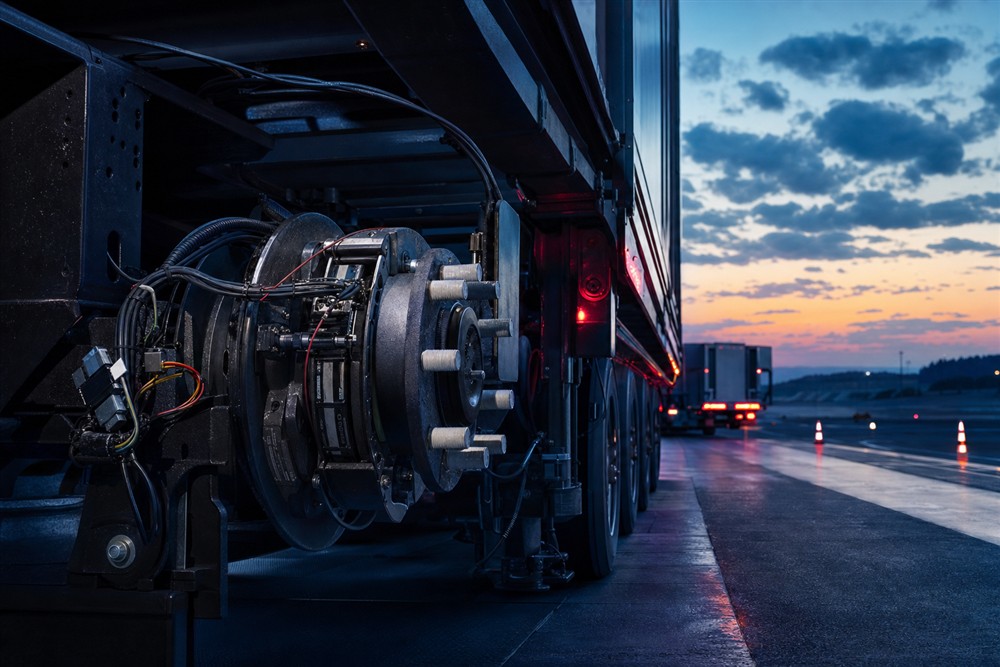
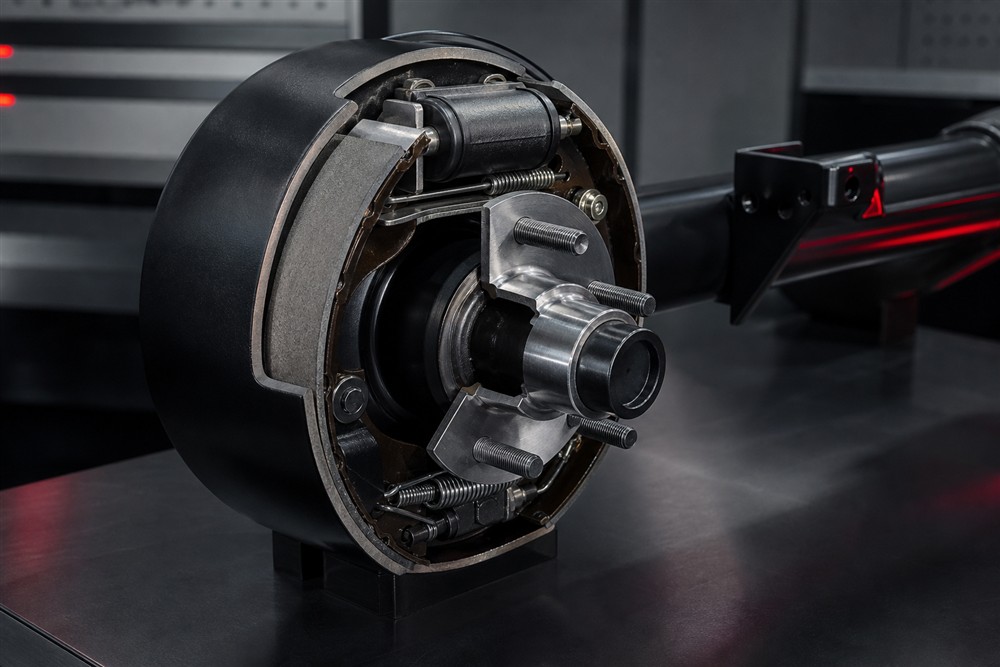
In an electric assembly, current energizes an electromagnet that contacts the rotating drum. The resulting movement drives an actuating lever, expanding the brake shoes against the inner drum surface. Friction converts motion into heat and slows the wheel. Hydraulic versions use fluid pressure to move the shoes, but heat management and shoe-to-drum contact remain central.
Components that influence performance
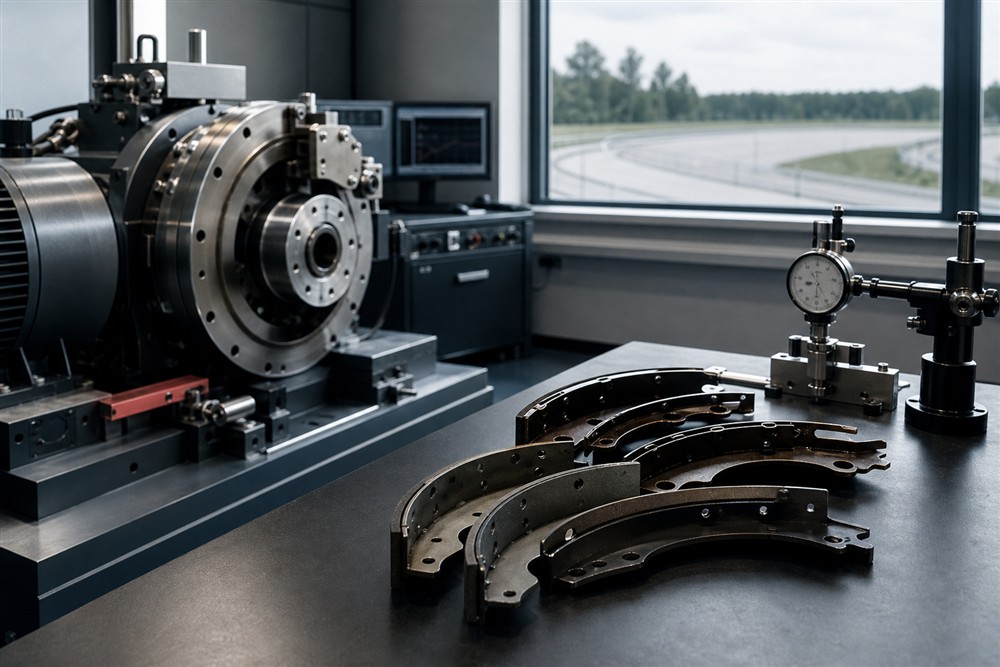
Brake shoe geometry, friction material, return springs, adjuster condition, backing-plate stiffness and magnet response all affect braking consistency. Poor shoe alignment can reduce contact area and create local overheating. Weak springs or incorrect adjustment can increase drag and uneven wear.
How to select an assembly
- Confirm axle rating and required brake capacity.
- Match drum diameter, shoe width and mounting-bolt pattern.
- Choose electric or hydraulic actuation to suit the trailer system.
- Check left-hand and right-hand orientation.
- Review environmental sealing, corrosion protection and service parts.
Questions for an OEM supplier
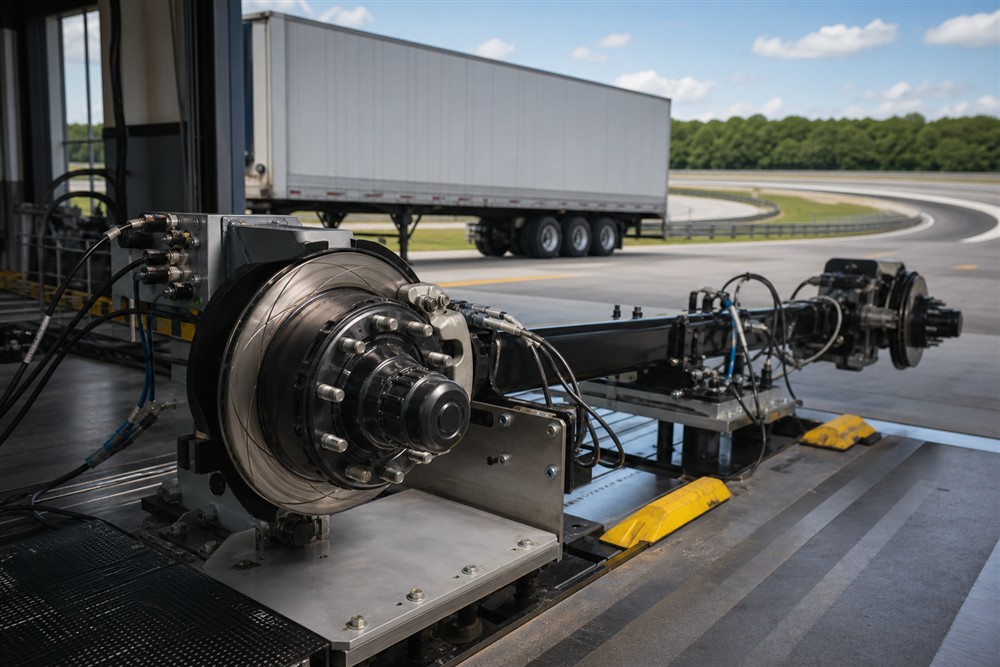
Ask for dimensional drawings, friction-performance data, endurance testing, traceability controls and batch inspection methods. For customized applications, provide axle geometry, gross load, duty cycle, target market and expected operating temperature.
Chiheng Brake supports OEM and ODM trailer brake projects from specification review through sample validation and production.