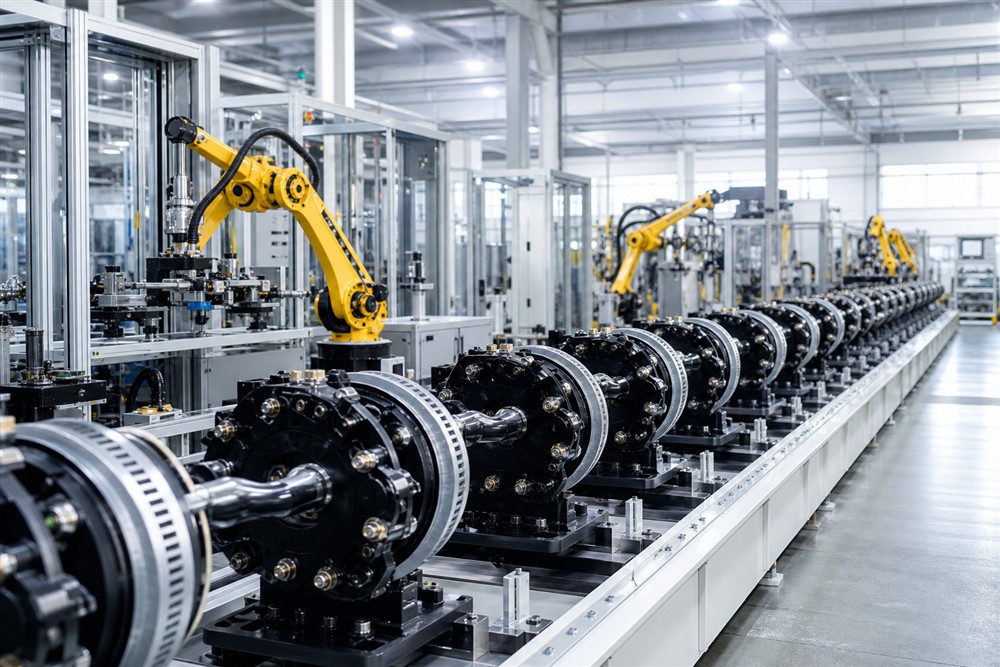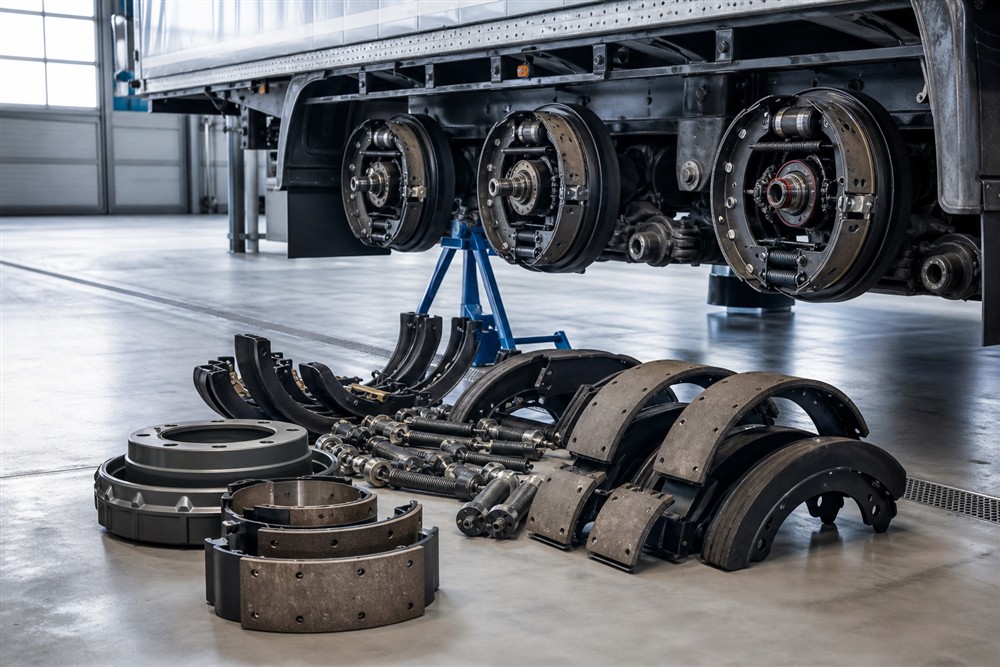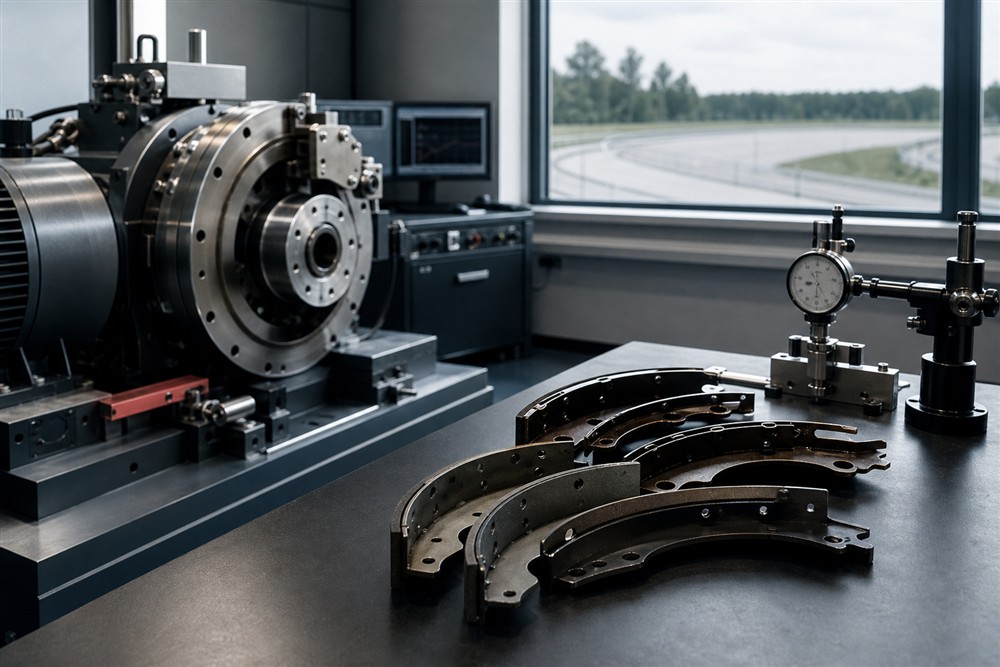
A brake shoe must transfer braking force from the steel shoe table into the friction lining. If the bond or attachment cannot withstand that load, the lining may shift, crack or separate.
What shear strength measures
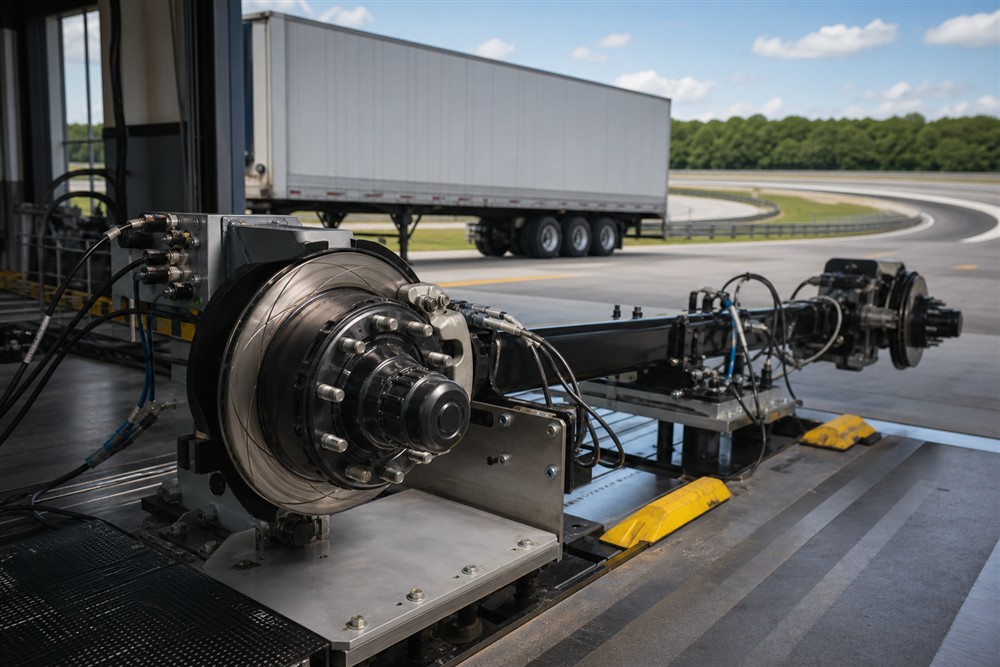
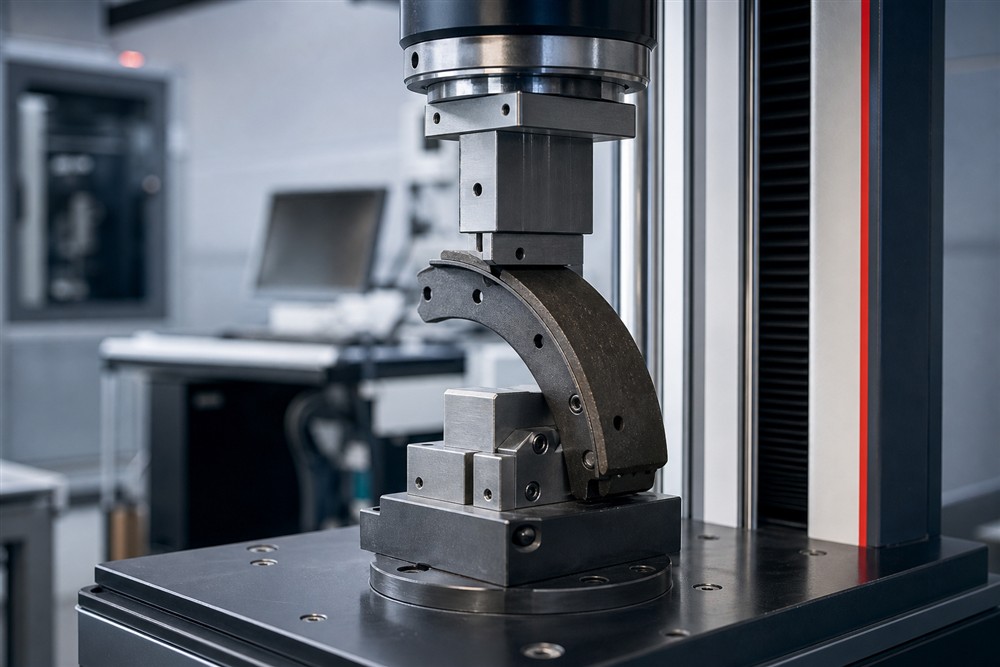
Shear testing applies force parallel to the interface between the lining and shoe. It evaluates the combined result of surface preparation, adhesive or riveting, curing conditions, lining strength and process consistency.
Common causes of weak attachment
Oil contamination, oxidation, poor blasting, incorrect adhesive thickness, incomplete curing and dimensional mismatch can all reduce strength. A good average is not enough if occasional parts fall below the minimum, so process control and traceability matter.
Testing and process control
- Control cleaning and surface roughness before bonding.
- Monitor adhesive application and curing temperature.
- Use representative sampling from each production batch.
- Record failure mode, not only peak force.
- Investigate adhesive-interface failures separately from lining failures.
What buyers should request
Buyers should review the applicable specification, test method, sample frequency and acceptance criteria. The supplier should also explain how nonconforming batches are contained and traced.
For safety components, reliable shear strength comes from a controlled process, not from final inspection alone.