Axle capacity and brake capacity must be treated as one system. A correctly rated axle does not guarantee safe stopping if the brake assembly, drum, hub, controller or hydraulic components are mismatched. Selection starts with the certified axle rating and actual operating conditions.
Start with axle rating and operating load
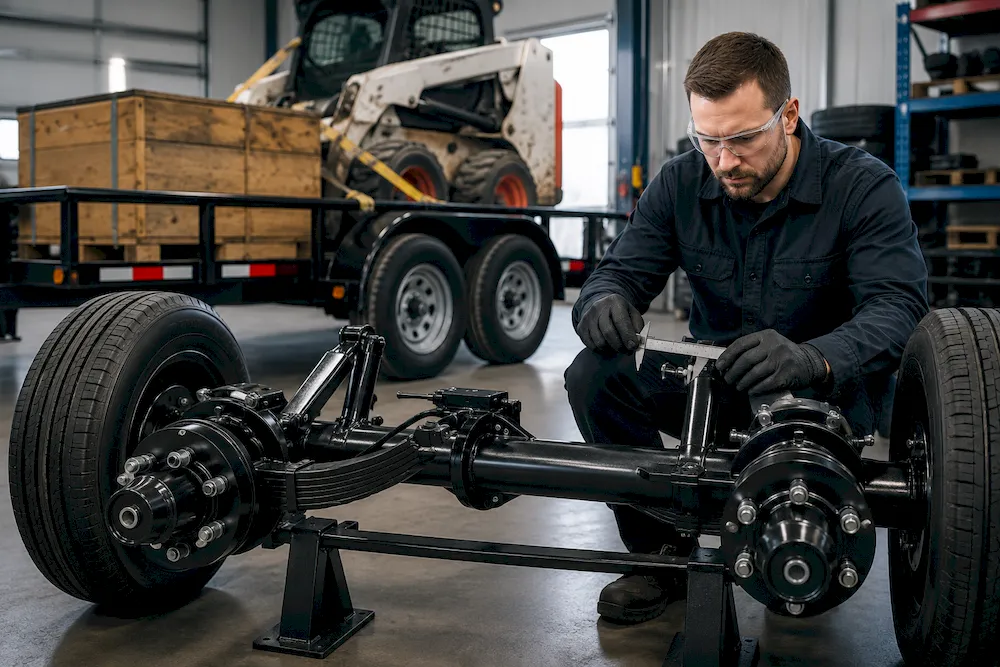
Common axle ratings include 3,500 lb, 5,200 lb, 6,000 lb, 7,000 lb, 8,000 lb, 10,000 lb and 12,000 lb. Confirm trailer GVWR, axle count, load distribution and maximum axle load. Tires, wheels, hubs, bearings, drums and brakes must all meet the requirement; the lowest-rated component limits the system.
Match the brake to the wheel end
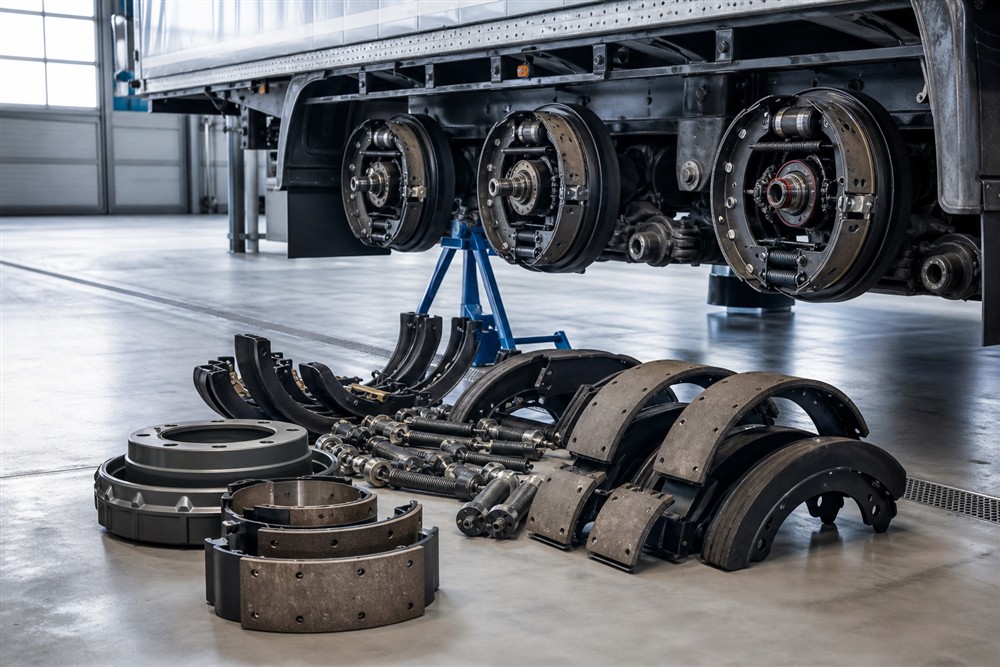
Nominal size combines drum diameter and shoe width, but dimensions alone are insufficient. Confirm the mounting-flange pattern, drum inside diameter, braking-surface width, bearings, wheel clearance, left/right position and manual or self-adjusting design.
A brake that bolts to the flange can still perform poorly if shoe arc, magnet, wheel cylinder or drum geometry is incompatible.
Choose the actuation method
Electric drum brakes
Electric brakes use an electromagnet and controller signal. Check magnet electrical characteristics, controller compatibility, wiring and the number of braked axles. Stable response and correct shoe adjustment are essential.
Hydraulic drum brakes
Confirm cylinder bore, actuator capacity, fitting arrangement, fluid compatibility and whether operation is surge or electronically controlled. Corrosive environments may require additional protection.
Consider duty cycle and temperature
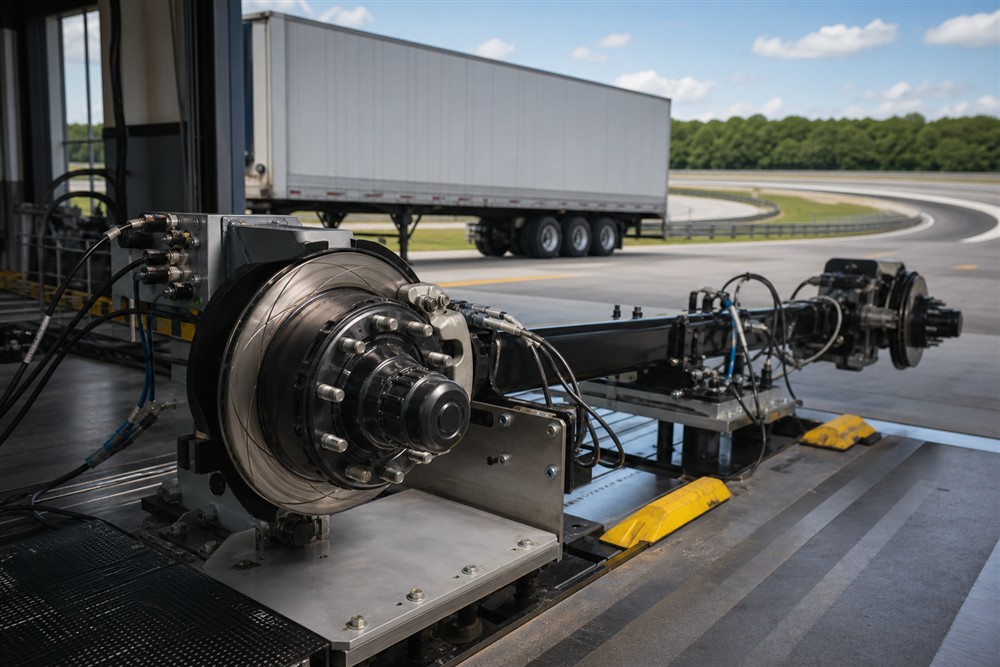
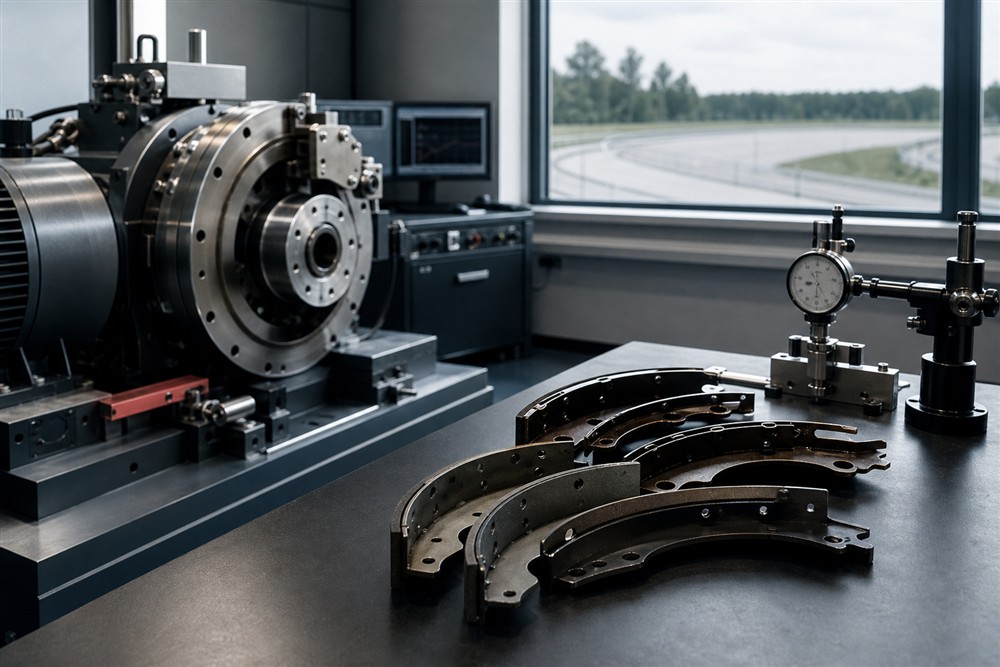
Trailers with the same axle rating may need different brakes. Review speed, braking frequency, gradients, ambient temperature, contamination and maintenance interval. Demanding applications require evidence for stopping performance, thermal behavior, lining wear, shear strength and actuation consistency.
Information for suppliers
- axle rating, axle count and GVWR;
- application and duty cycle;
- brake, drum and mounting-flange dimensions;
- electric or hydraulic actuation;
- manual or self-adjusting requirement;
- market and compliance requirements;
- photos, drawings and current part numbers.
Common mistakes
- choosing by appearance or price;
- assuming equal diameter means equal capacity;
- mixing incompatible drums, shoes, magnets or cylinders;
- ignoring left/right orientation;
- upgrading axle capacity without reviewing the full brake system.
Final checklist
The correct trailer brake matches axle class, wheel-end geometry, actuation, duty cycle and destination market. Confirm the specification before ordering and validate adjustment and balance after installation. Chiheng Brake can review drawings, samples and application data for OEM/ODM development.